Sleeperholic

Best Mattress for Heavy Side Sleepers (2026)

Heavier side sleepers face two demands that pull in opposite directions: the shoulder and hip need deep pressure relief, but the extra body weight means standard comfort layers compress and bottom out, dropping you onto the hard support core. Past roughly 230 pounds, the soft foam that cushions a lighter side sleeper simply runs out of travel, so you need thicker, higher-density comfort foam (around 4 to 5 lb/ft³) over a reinforced coil or firm support core that won't sag under concentrated load. The right bed here reads as medium — soft enough at the surface to cradle the shoulder and hip, firm enough underneath to keep the heavier pelvis from sinking through. Durability matters too, because more weight accelerates the softening and sagging that ends a mattress's useful life.

Disclosure: This post may contain affiliate links. If you purchase through these links, we may earn a small commission at no extra cost to you.

Our top picks

Top PickHybridPremium

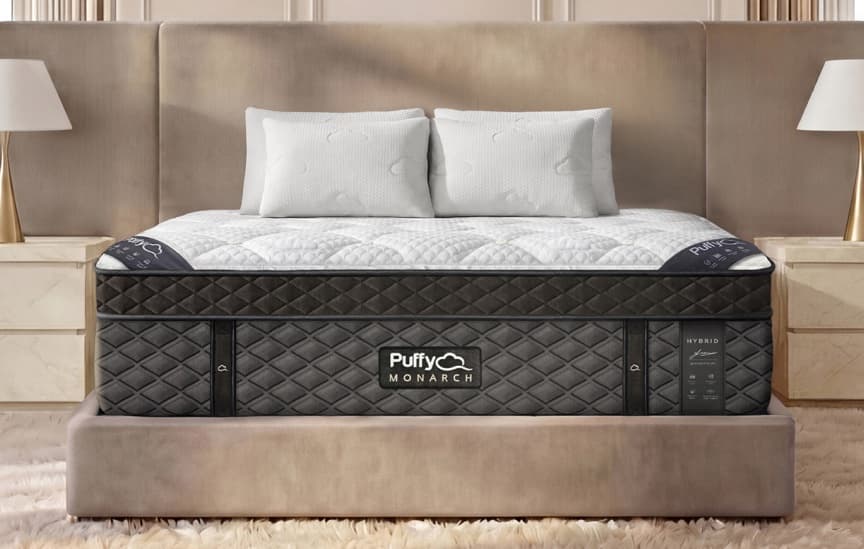
Puffy Monarch Hybrid Mattress

Why it fits: reinforced heavy-body support for heavier side sleepers.

Pros

  • Best-in-lineup edge support (9.5/10 tested) from a reinforced 6" coil + 1.5" support-foam perimeter
  • Tested up to 300 lb with "outstanding" pressure relief across sleep positions
  • A latex response layer adds real bounce most all-foam luxury beds lack

Cons

  • NapLab found "slow material responsiveness" — noticeably harder to reposition or change positions quickly than Lux Hybrid
  • Off-gassing lasted 18 days in testing
  • Its own overall NapLab performance score (8.23) ranks below the site average and below Puffy's own cheaper Lux Hybrid — a weak value story at this price
Best ValueHybridBudget

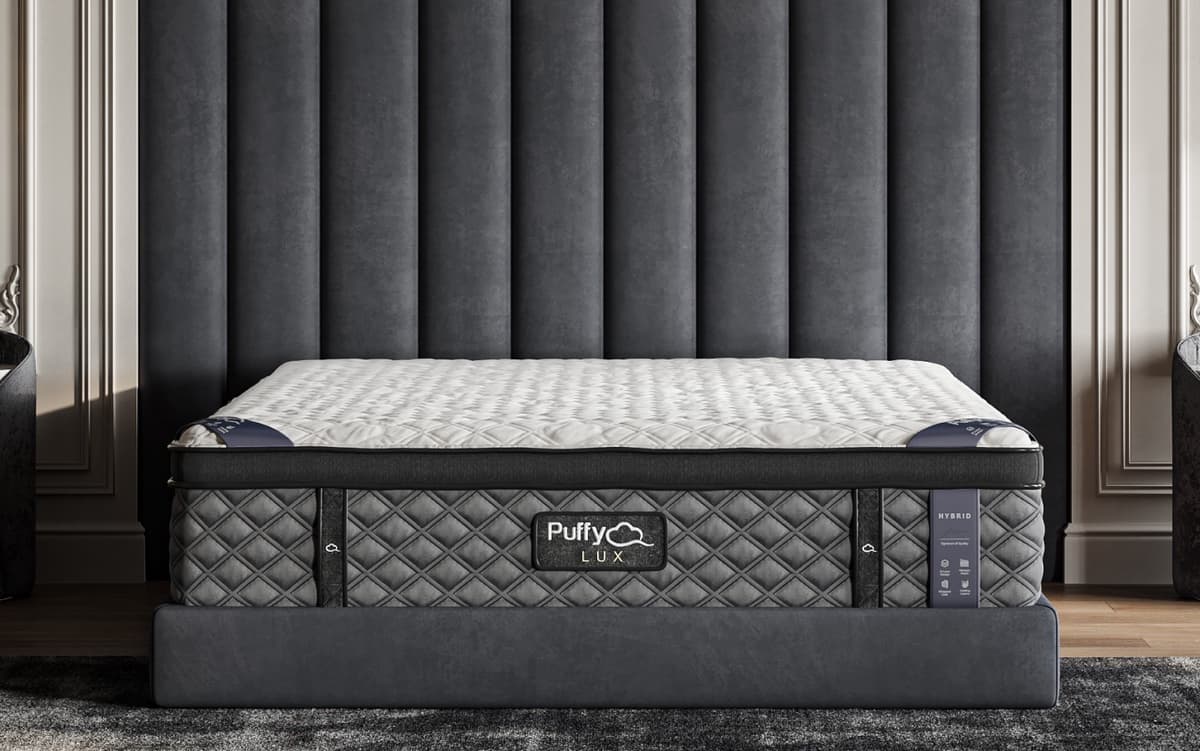
Puffy Lux Hybrid Mattress

Why it fits: reinforced heavy-body support for heavier side sleepers.

Pros

  • NapLab-tested 10/10 pressure relief and 9/10 cooling — not just Puffy's own claims
  • Wrapped coils are rated to support up to 300 lb per side across all sleep positions
  • Holds up well at the edge (8.7/10 tested) despite the plush medium feel

Cons

  • Off-gassing lasted 23 days in independent testing — well above the 7-day average for the category
  • Motion transfer is only middling for a hybrid (7.4/10) — restless co-sleepers may still notice movement
  • At $799 it sits right at the budget/mid price boundary; Puffy's own sale pricing shifts often
Also ConsiderHybridMid-range

Puffy Royal Hybrid Mattress

Why it fits: reinforced heavy-body support for heavier side sleepers.

Pros

  • A 7" comfort layer (vs. a 4.1" category average) gives genuinely dramatic contouring — tested "outstanding" pressure relief in every sleep position
  • Independent testing found it suitable for all body weights, not just lighter sleepers
  • Wool-blend cover absorbs up to 30% moisture for a measurably drier sleep surface

Cons

  • Thick foam comfort layers compress at the perimeter — testers found it "moderately challenging" to sit on the edge
  • 14" profile is heavier and slower to reposition on than Puffy's firmer, thinner tiers
  • A real step up in price over Lux Hybrid for what's mostly incremental thickness/plushness
AlternativeHybridPremium

Puffy Legacy Hybrid Mattress

Why it fits: reinforced heavy-body support for heavier side sleepers.

Pros

  • Horsehair NobleAire layer measured 2–3°F cooler than the already-cool Royal Hybrid in third-party testing — best temperature regulation in the lineup
  • Removable cashmere-wool cover over Talalay latex and memory-foam comfort layers
  • Handcrafted in the USA, 365-night trial, lifetime warranty

Cons

  • $4,899 queen price is roughly 2.5x the Monarch, with no independent NapLab/Sleep Doctor lab data yet to verify Puffy's own performance claims
  • Only one firmness offered — no option to tune feel like the rest of the lineup implicitly allows via body-weight variance
  • At roughly 150 lb for a queen, it's genuinely awkward to reposition or rotate without help
AlternativeLatexMid-range

Overweight Bariatric Mattress

Why it fits: reinforced heavy-body support for heavier side sleepers.

Pros

  • The single clearest "built for 300–400 lb sleepers" pick in the entire catalog — 5" Talalay latex over high-resiliency support foam
  • Custom built-to-order to account for the sleeper's specific weight and firmness needs
  • Highest heavy-support score in the catalog, by design and construction, not just marketing

Cons

  • Firm-only positioning is a poor fit for anyone wanting a plush or soft feel
  • Custom/build-to-order likely means a longer lead time than the off-the-shelf mattresses in this catalog
  • The original ASIN this catalog referenced (B00IQFGBZO) is delisted — replaced with the brand's current live Queen listing (verified 2026-07-09)

Compare these mattresses

Comparison of the recommended mattresses
MattressTypeFirmnessPriceStands out for
Puffy Monarch Hybrid MattressHybrid4–6/10PremiumPressure relief
Puffy Lux Hybrid MattressHybrid5–6/10BudgetPressure relief
Puffy Royal Hybrid MattressHybrid4–6/10Mid-rangePressure relief
Puffy Legacy Hybrid MattressHybrid5–6/10PremiumCooling
Overweight Bariatric MattressLatex8–9/10Mid-rangeHeavy-body support

What to look for

Go hybrid with reinforced coils

For side sleepers over about 230 pounds, an all-foam bed usually compresses too far and offers little lasting support. A hybrid with a sturdy wrapped-coil core — ideally a lower-gauge (thicker) 13–14.5-gauge steel — holds the heavier hips up while the comfort layer still cradles the shoulder. That combination is hard to get from foam alone at this body weight.

Demand thick, high-density comfort foam

Thin or low-density comfort layers bottom out under heavier side sleepers, so the shoulder and hip end up pressing into the firm core. Look for at least 3 to 4 inches of comfort material at a density around 4 to 5 lb/ft³, which has the resilience to keep cushioning at the pressure points instead of collapsing flat in a season.

Firmness feels softer than the label says

Heavier bodies push deeper into any mattress, so a bed rated medium-firm can feel medium to a heavier side sleeper. That's actually useful — it means you get pressure relief and support at the same time. Aim for a nominal 5.5 to 6.5; it'll present as the pressure-relieving medium feel a side sleeper wants once you're on it.

Prioritize durability and edge support

More weight accelerates foam softening, coil fatigue, and edge breakdown, so a bed that feels fine at first can develop a body-impression sag within a couple of years. Higher-density foams, tempered coils, and a reinforced perimeter all extend usable life — and a firm edge makes it easier to sit and push up when getting in and out of bed.

Frequently asked questions

What is the best mattress for heavy side sleepers?

A hybrid with a reinforced coil core and 3 to 4 inches of dense (4–5 lb/ft³) comfort foam, at a nominal medium-firm around 5.5 to 6.5. That build cushions the shoulder and hip while keeping the heavier pelvis from sinking through to the base. All-foam beds tend to bottom out and sag faster for side sleepers over about 230 pounds.

Do heavy sleepers need a firmer mattress?

They generally need more supportive construction, though not necessarily a firmer feel. Because a heavier body sinks deeper, a mattress rated medium-firm often feels medium once you're on it. The key is a strong support core — coils or high-density foam — under the comfort layer, so you get pressure relief without bottoming out.

Why does my mattress sag if I sleep on my side and weigh more?

Extra body weight concentrated on the hip and shoulder accelerates foam softening and coil fatigue, so a body-shaped impression forms faster than it would for a lighter sleeper. Choosing higher-density foams (4 lb/ft³ and up) and tempered, lower-gauge coils slows that breakdown considerably and keeps the surface supportive for longer.

Keep exploring