How do you Roll Up A Sleeping Bag? [The Complete Guide]
![How do you Roll Up A Sleeping Bag? [The Complete Guide]](/_next/image/?url=%2Fwp-content%2Fuploads%2F2020%2F05%2Froll-up-sleeping-bag-time-to-roll-up.png&w=3840&q=75)
Disclosure: This post may contain affiliate links. If you purchase through these links, we may earn a small commission at no extra cost to you.
Are you excited about your first camping or backpacking trip? Learning to fold a sleeping bag is one of the skills required to keep you mobile during the day and comfortable at night especially in not so favorable climates.
Unfortunately, many beginners struggle with the process and end up wasting a lot of time or with a partially rolled-up sleeping bag that is too cumbersome to carry. This can put a dent in the whole outdoor experience.
Quick answer: Lay the sleeping bag flat, fold it in half lengthwise to press out trapped air, then roll tightly starting from the foot end toward the hood, pushing out air as you go, and secure it with the compression straps. Mummy bags roll the same way but need the tapered foot and hood shaped down first so the roll stays even. Rolling is generally faster and better for packing into a stuff sack, while folding flat is gentler on the insulation and better for short-term storage at home.
How do you Roll Up A Sleeping Bag?
Rolling up a sleeping bag may be less complicated than it sounds as long as you follow the right instructions and get the necessary materials to make it a success. Here’s a simple step by step tutorial for beginners to fold their outdoor sleeping bags successfully.
1. Gather The Supplies
The folding process requires a few supplies that may be readily available at home so, there’s no need to panic. These essentials include:
-
**Sleeping bag **
-
Straps long enough to wrap around the rolled-up bag (most sleeping bags ship with straps so this may be unnecessary).
-
Duct tape (Your foot or any heavy object can be a suitable alternative)
2. Spread The Sleeping Bag
It is time to spread the sleeping bag on a clean and dry floor. Run your hands down every inch of the bag’s surface to make sure it is completely flat. Keep in mind that the flatter the sleeping bag’s surface, the higher the chances of rolling it up with ease and ending up with the most portable size.
3. Fold it in Half
Whether the sleeping bag comes in a rectangular, semi-rectangular, or mummy shape, fold it evenly in half can be critical. After folding, run your hands down the length and breadth of the bag to eliminate any air bubbles that may have invaded the bag during the folding process.
Since the opening of the bag at the top is where any excess air bubbles can escape, the trick is to flatten the bag from bottom to the top.
Finally, make sure the two long sides of the sleeping bag are properly aligned to make the folding-up process as smooth as possible.
4. Time To Roll-Up The Sleeping Bag
The roll-up process is where all the magic happens and the instructions are as follows:
-
Place any heavy object such as a large duct tape at the top part of the sleeping bag to keep it steady while rolling it up.
-
Begin at the bottom or foot section of the bag and roll it up to the top to push out any air bubbles.
-
Keep the bag as small and tight as possible by placing the knees on the rolled-up section as you continue to roll.
-
If the top or head section begins to unravel during rolling, adjust the position of the heavy object to keep it steady.
-
Remember, the thicker the size of the bag, the higher the amount of movement possible during rolling up.
-
Try to roll up the bag to the smallest size by pushing out optimum amounts of air at every step.
-
Wrap the straps attached to the bag or (bought separately) around the bag to ensure the rolled-up bag stays small and does not unravel.
-
Put the folded sleeping bag into a backpack or sack for easy transportation.
How to Roll Up a Mummy Sleeping Bag
Mummy bags are shaped to hug the body, tapering narrow at the feet and wide at the shoulders with a fitted, hooded top. That taper is exactly why they can be trickier to roll evenly than a rectangular bag — the extra fabric at the shoulders and hood tends to bunch up if you don't manage it deliberately.
-
Zip the bag fully closed and cinch the hood drawcord so the hood lies flat instead of flopping loose during the roll.
-
Start the roll from the foot end, where the taper is narrowest, and keep the roll as tight and even as possible before you reach the wider shoulder section.
-
Flatten and smooth the hood and shoulder area by hand just before you roll over it — this is the section most likely to create a lumpy, uneven roll if you rush it.
-
Compress gradually rather than forcing it — mummy bags are often filled with down or high-loft synthetic insulation, and a slow, even roll pushes out air without crushing the fill unevenly.
-
Use the compression sack that shipped with the bag if you have one. Mummy bags are frequently sold with dedicated compression sacks because their shape makes them harder to stuff evenly into a generic sack by hand.
Rolling vs Folding a Sleeping Bag
Rolling and folding solve different problems, and knowing when to use each can extend the life of your bag. Rolling — the method above — squeezes out the most air and produces the smallest, most transportable size, which is why it's the default for backpacking and hiking trips where pack space is at a premium.
Folding flat (without compressing it into a tight roll) is better for storage between trips. Repeatedly compressing the same creases every time you roll a bag can, over months and years, flatten the insulation along those fold lines and reduce loft. If you're packing for a trip, roll it. If you're putting it away in a closet for a few weeks or months, folding it loosely or hanging it is easier on the fill.
What is A Sleeping Bag?
A sleeping bag is a lightweight quilt fabric bedding typically designed to be covered with a zipper that serves as a sleeping surface for outdoor environments. It features built-in insulation to keep the sleeper warm even during the coldest temperatures at night.
Types of Sleeping Bags
📺 Watch: How to Choose Backpacking Sleeping Bags || REI Sleeping bags come in 3 main types based on their temperature ratings. The time of the year you’re going camping as well as individual preferences can determine the right type to choose.
Being aware of the differences is essential because nothing can be worse than rolling up the wrong sleeping bag for a camping or hiking trip. The probability of getting good sleep could be next to zero.
Summer Season: These are bags with a temperature rating of 30 degrees Fahrenheit and higher.
Three-Season: The temperature rating for 3-season sleeping bags range between 15-30 degrees Fahrenheit.
Winter Season: Winter season sleeping bags come with temperature ratings of 15 degrees Fahrenheit and lower.
How To Preserve the Lifespan of Rolled-Up Sleeping Bags
Folding a sleeping bag can be a great way to reduce its size for easy transportation among campers, hikers, road trippers, and other outdoor adventure enthusiasts. Unfortunately, the folding process may be a source of significant wear and tear on the bag’s physical condition which can decrease its lifespan.
Here are a few tried and tested techniques to preserve the physical condition of these bags during and after rolling it up.
1. Avoid Rolling it Up During Storage
It can be tempting to roll up a sleeping bag during storage especially among those with limited space at home. However, this can lead to a quicker deterioration of the bag’s built-in loft especially when rolled up tightly with little to no air.
Since the loft promotes insulation during (cold weathers) and air circulation (during the harshest summer nights), this can dwindle the powers of the sleeping bag quickly. Instead, leave the sleeping bag loosely in a closet or another storage area when not in use. Anytime you pick it up for an outdoor trip, maximum protection from the weather elements can be guaranteed.
2. Get A Stuff Sack
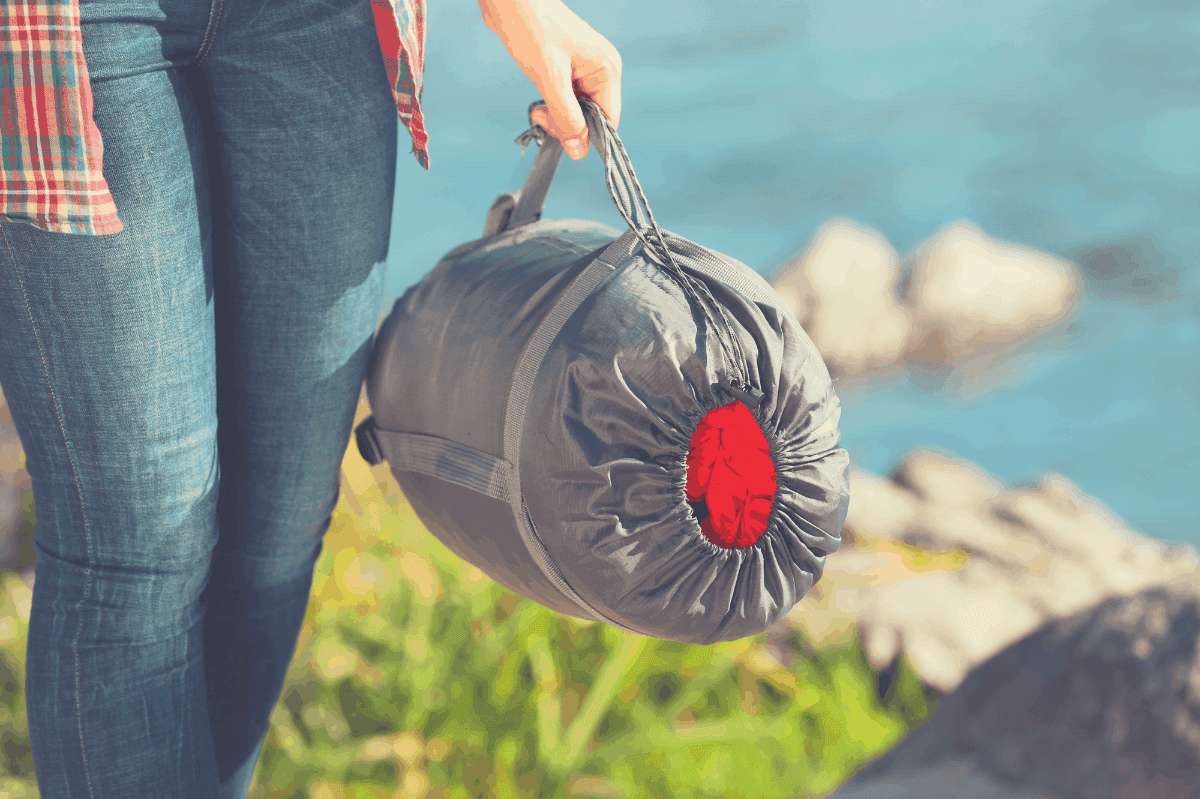
You need all the space you can get when backpacking internationally or on an outdoor trip not too far from home. This is where the optimum packing properties of stuff sacks can come in handy.
Integrated with several straps that can be maneuvered to make the size of the rolled-up sleeping bag even smaller, these sacks can be a real asset. The good news is that stuff sacks come in different sizes so you can even order one big enough to accommodate your sleeping bag and other personal effects.
3. Reverse Wind-Proof and Water-Proof Bags
Wind-proof and water-proof bags can be a nightmare to roll-up when traveling for an outdoor trip. This is because of the external layering of these bags which repel air during harsh outdoor conditions.
During folding-up of a bag when you need to keep out as much air as possible, the external layering can act in the opposite by trapping air in the bag. The only way out may be to turn such bags inside out before zipping them and following the standard roll-up process stipulated earlier.
4. Practice Good Bag Care
Good bag care can be vital to maximizing the lifespan and functionality of a sleeping bag. As previously stated, folding a sleeping bag tightly during storage is a big no-no. Instead, let it air out in the sun after each trip for a few hours to eliminate any odors and traces of bacteria.
Additionally, brush away unwanted particles such as mud, dust, leaves, molds, or mildew immediately upon arriving home even if the weather is not clear enough for outdoor drying. Make sure not to overexpose the sleeping bag to the sun’s rays as that can cause severe damage to the bag’s internal components.
5. Look Out For Leaking Down Feather Fabric
Down feather is one of the most popular fabrics in the sleeping bag industry. Even brand new models may show leaking pieces of down feathers and this may worsen over time as the sleeping bag begins to deteriorate physically.
Always pull any traces of down feather leakages back into the bag immediately because it is something to be expected.
When A Sleeping Bag Is Too Big For your Backpack
One of the common problems campers and outdoor enthusiasts face is the struggle to fit a sleeping bag into the complementary backpack the manufacturer ships with the bag. This issue may pop up during one of the following scenarios:
-
**The sleeping bag was not folded flat enough **
-
The manufacturer mismatched the size of the bag and shipped stuff sack
The only way out of this conundrum may be to refold the sleeping bag smaller by getting a pair of extra hands to roll up as tightly as possible while keeping out the maximum amount of air.
If the complementary stuff sack features synthetic material, buying a down fiber laze bag can be a great option too.
Do you Need to Learn How to Roll A Sleeping Bag?
Learning how to roll up a sleeping bag can come in handy if you fall into the following categories.
-
Backpackers
-
**Campers **
-
Hikers
-
**The Homeless **
-
**Road Trippers **
If you're weighing sleeping bags against other outdoor sleep setups, our guides to sleeping on a cot for camping and car camping cover the alternatives.
Frequently Asked Questions
What is the Best Way to Roll a Sleeping Bag?
Lay the bag flat, fold it in half lengthwise to squeeze out trapped air, then roll tightly starting from the foot end and working toward the head, pressing air out as you go. Rolling with your knees to keep steady, even pressure on the bag produces the tightest, most compact roll and makes it far easier to fit back into its stuff sack.
How Do You Fold a Sleeping Bag?
Folding is different from rolling: instead of compressing the bag into a tight cylinder, lay it flat and fold it into thirds or quarters without cinching it down tightly. This is the better option for home storage between trips, since it doesn't repeatedly crease the same lines in the insulation the way tight rolling does.
How Do You Roll Up a Mummy Sleeping Bag?
Zip the bag shut and cinch the hood first so it lies flat, then start rolling from the narrow foot end toward the wider shoulder and hood section, smoothing out the fabric by hand as you go. The tapered shape means mummy bags need a bit more care than rectangular bags to avoid an uneven, lumpy roll — a dedicated compression sack, if the bag came with one, makes this much easier.
How Do You Use a Sleeping Bag?
Unroll the bag fully and let it loft for a few minutes before climbing in, since insulation needs time to fluff back up after being compressed in a pack. Zip it up to your comfort level, use the hood drawcord on mummy bags to seal in warmth around your head and shoulders, and choose a bag rated for temperatures at or below what you expect that night rather than cutting it close.
Conclusion
Learning how to roll up a sleeping bag properly can be a great piece of skill that may come in handy in various situations. Some bags may be easier to compress than others due to their size, shape, and built-in material.
The good news is that we’ve shared the tips to fold up sleeping bags of any type successfully. If you own a 2- person or 3-person sleeping bag, it might be imperative to get additional help to make the process as smooth as possible.

Founder of Sleeperholic and a lifelong sleep obsessive. My real interest is the theory of good sleep — what to do before bedtime, what a genuinely restful night looks like, and how to sleep well every night. I hope you enjoy reading everything about sleep as much as I enjoy writing it.
![Sleeping on a Cot [7 Reasons Why They’re Perfect]](/_next/image/?url=%2Fwp-content%2Fuploads%2F2019%2F10%2Fcamping-1.png&w=3840&q=75)
![Does Sleeping Naked Help Lose Weight? [The Truth]](/_next/image/?url=%2Fwp-content%2Fuploads%2F2023%2F03%2Fweight-sleep.webp&w=3840&q=75)